2026-06-18 · 4 min read
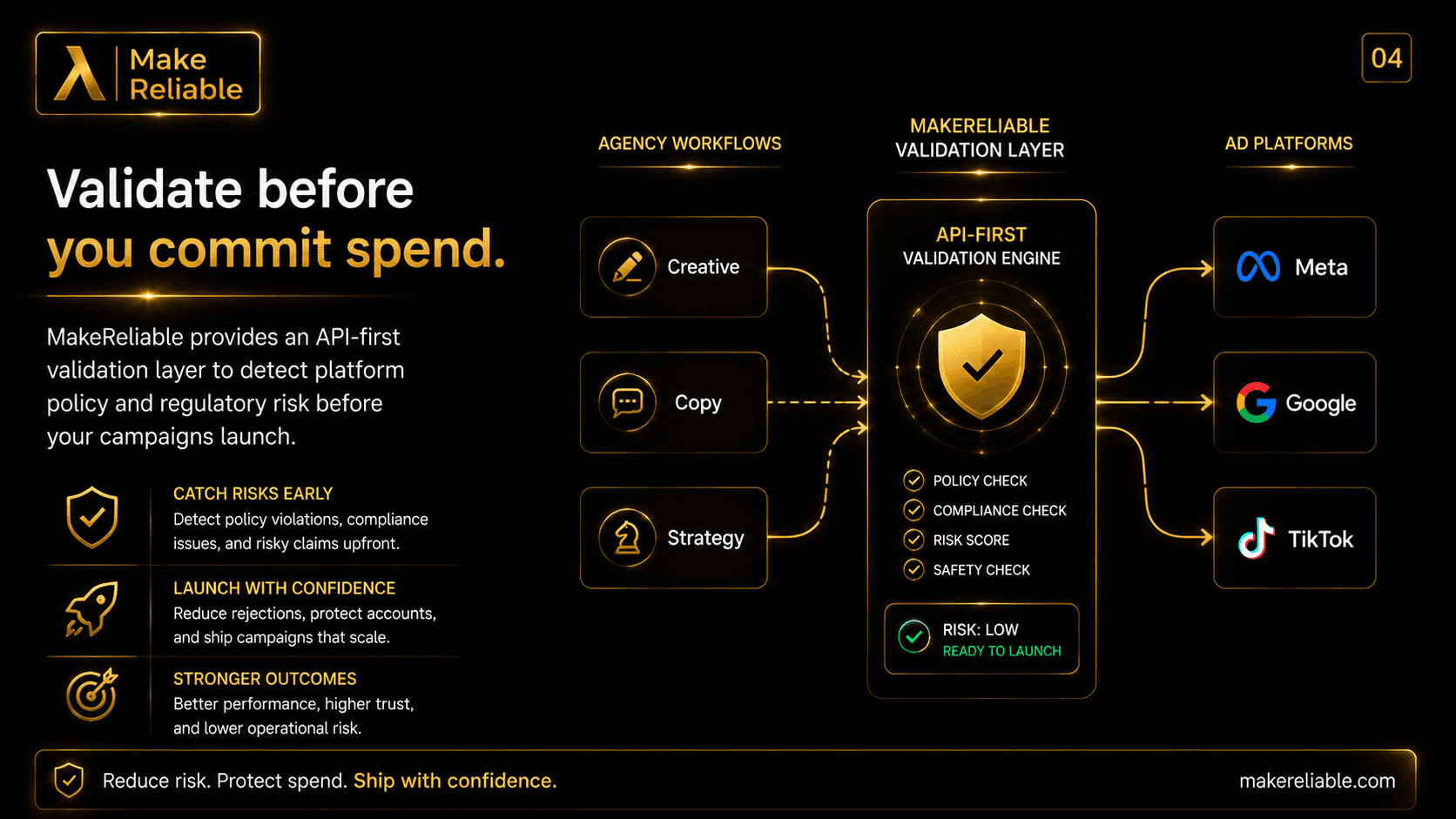
Validate Before You Commit Spend
Paid media risk is often discovered after budget is already committed. Pre-launch validation helps teams check creative, copy, landing pages, policy risk, and readiness before money and momentum are exposed.
2026-06-18 · 4 min read
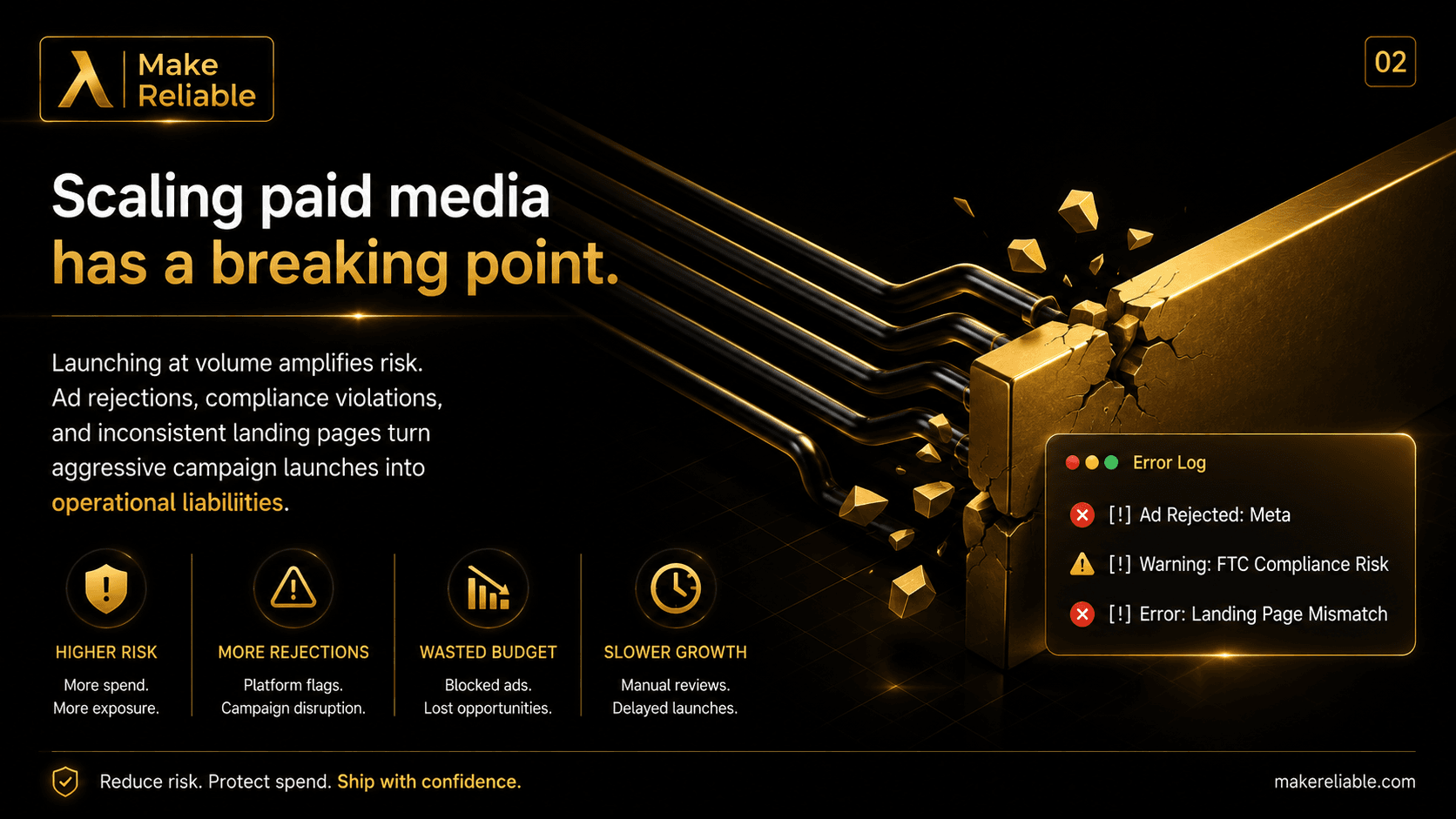
Scaling Paid Media Has a Breaking Point
Paid media does not break at scale because one ad is bad. It breaks when operational risk across claims, policy, landing pages, tracking, and follow-up grows faster than validation.
2026-06-18 · 4 min read
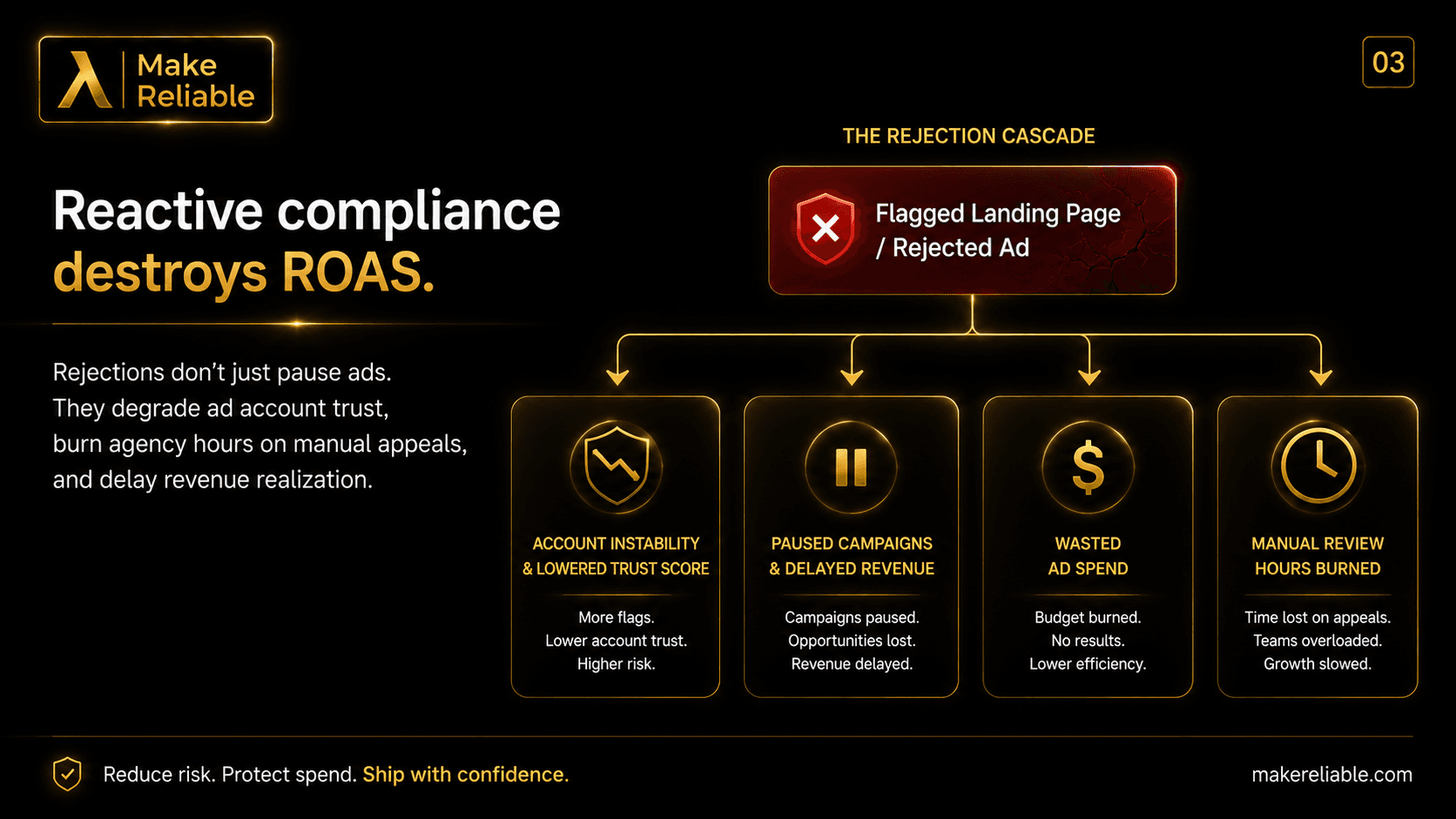
Reactive Compliance Destroys ROAS
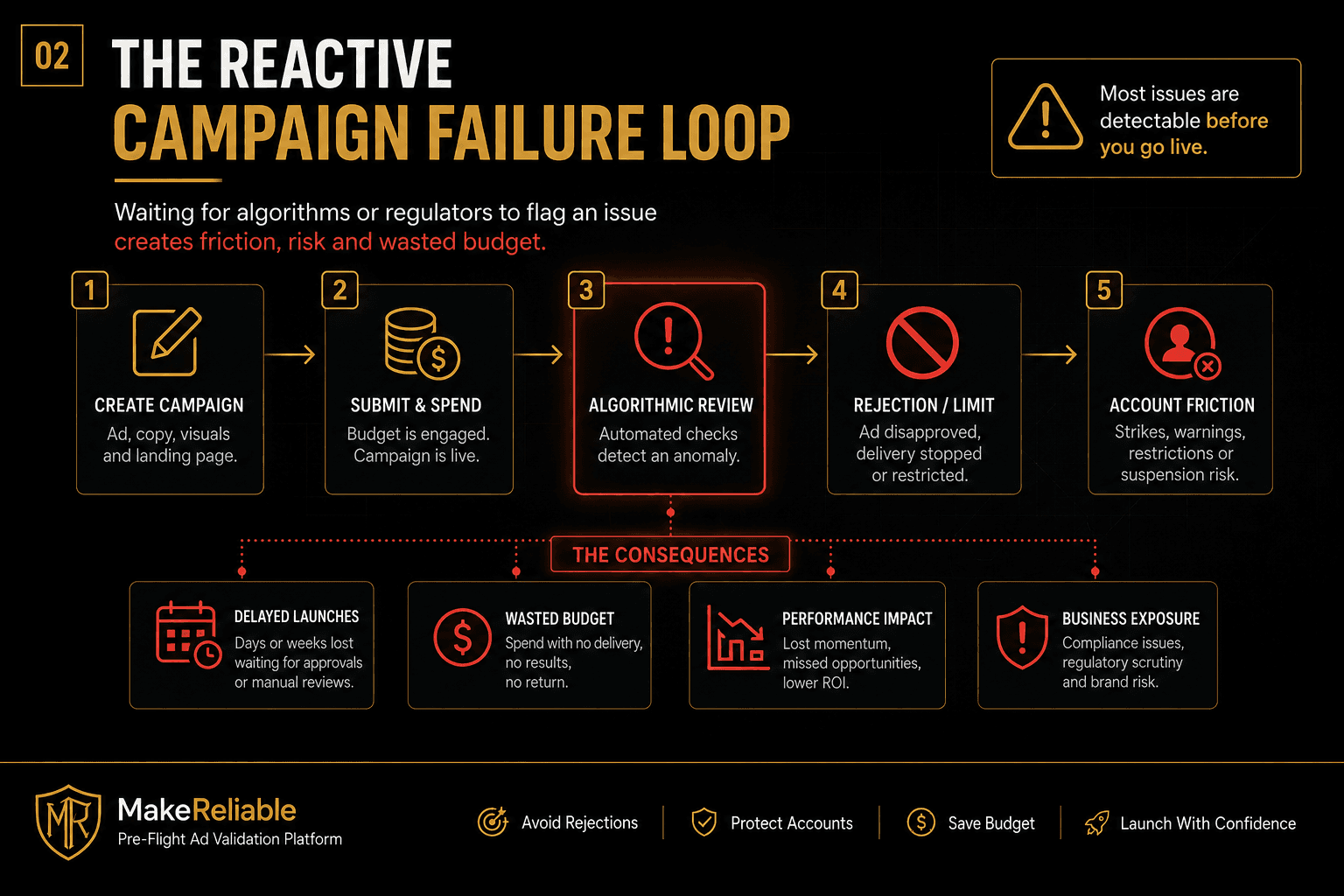
Reactive compliance feels efficient until a rejected ad, flagged landing page, or late policy issue starts a cascade of wasted spend, lost time, and delayed revenue.
2026-06-18 · 4 min read
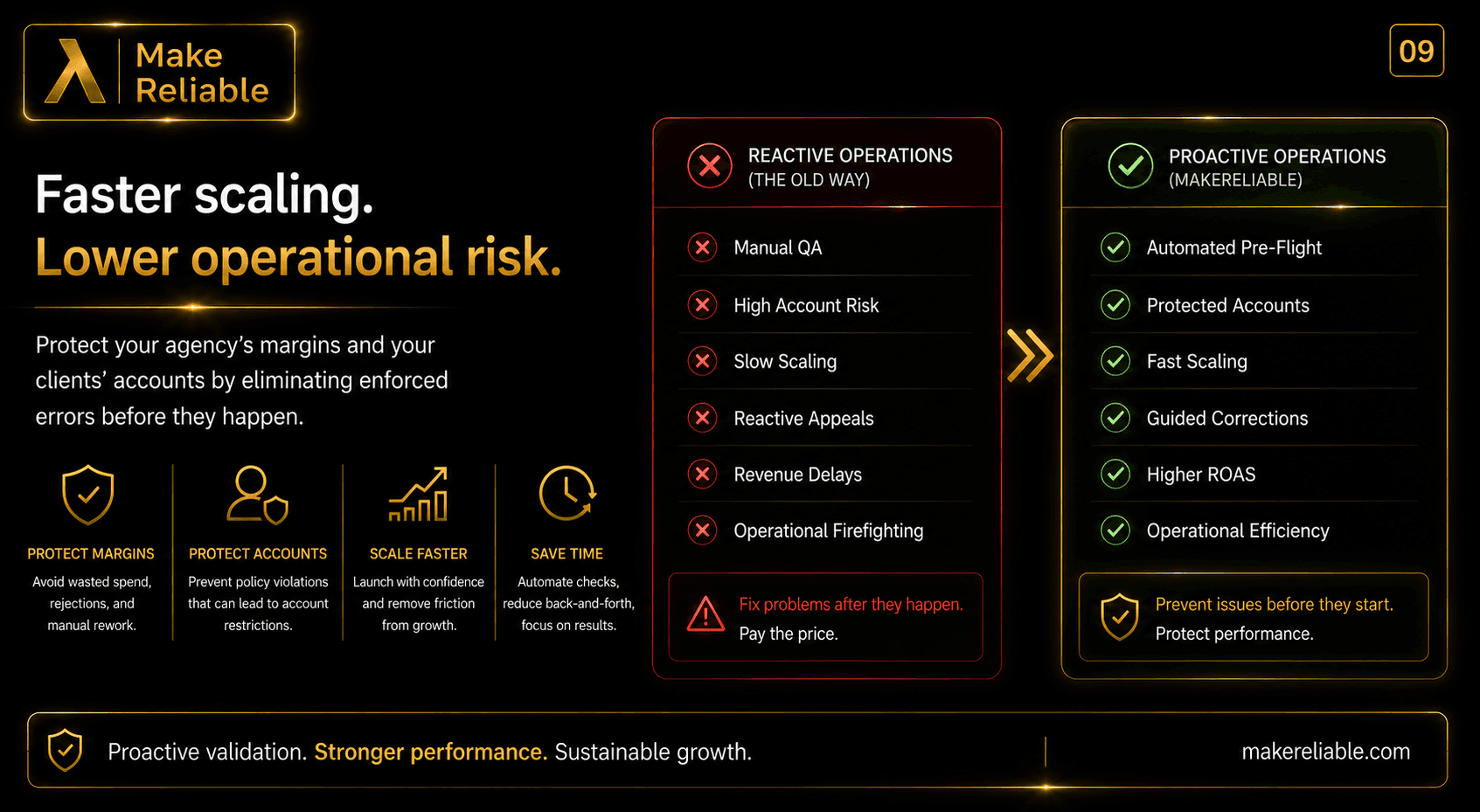
Faster Scaling, Lower Operational Risk: Why Agencies Need Proactive Campaign Validation
Agencies scale faster when campaign risk is caught before launch instead of fixed after rejection, delay, and manual appeals.
2026-06-18 · 4 min read
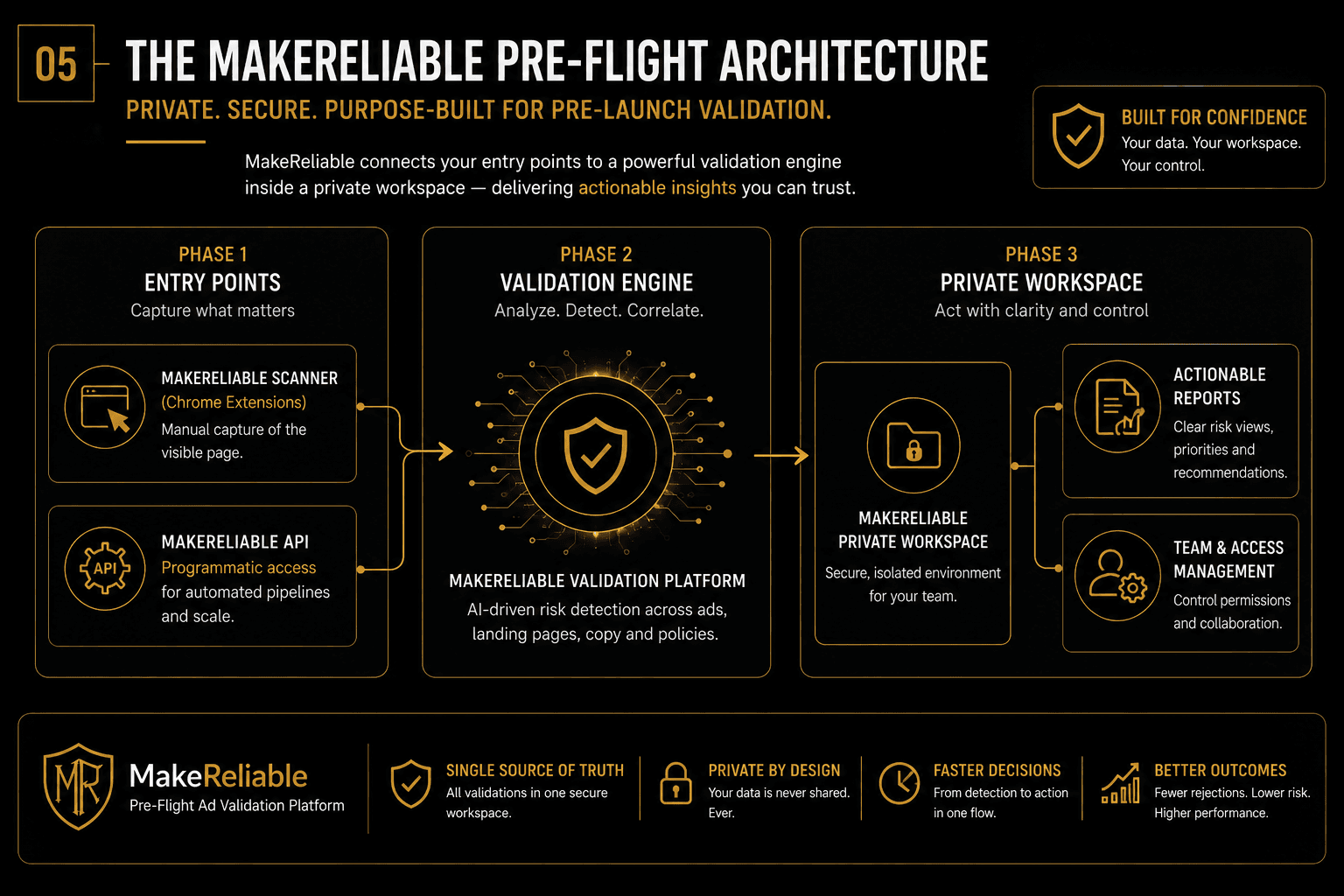
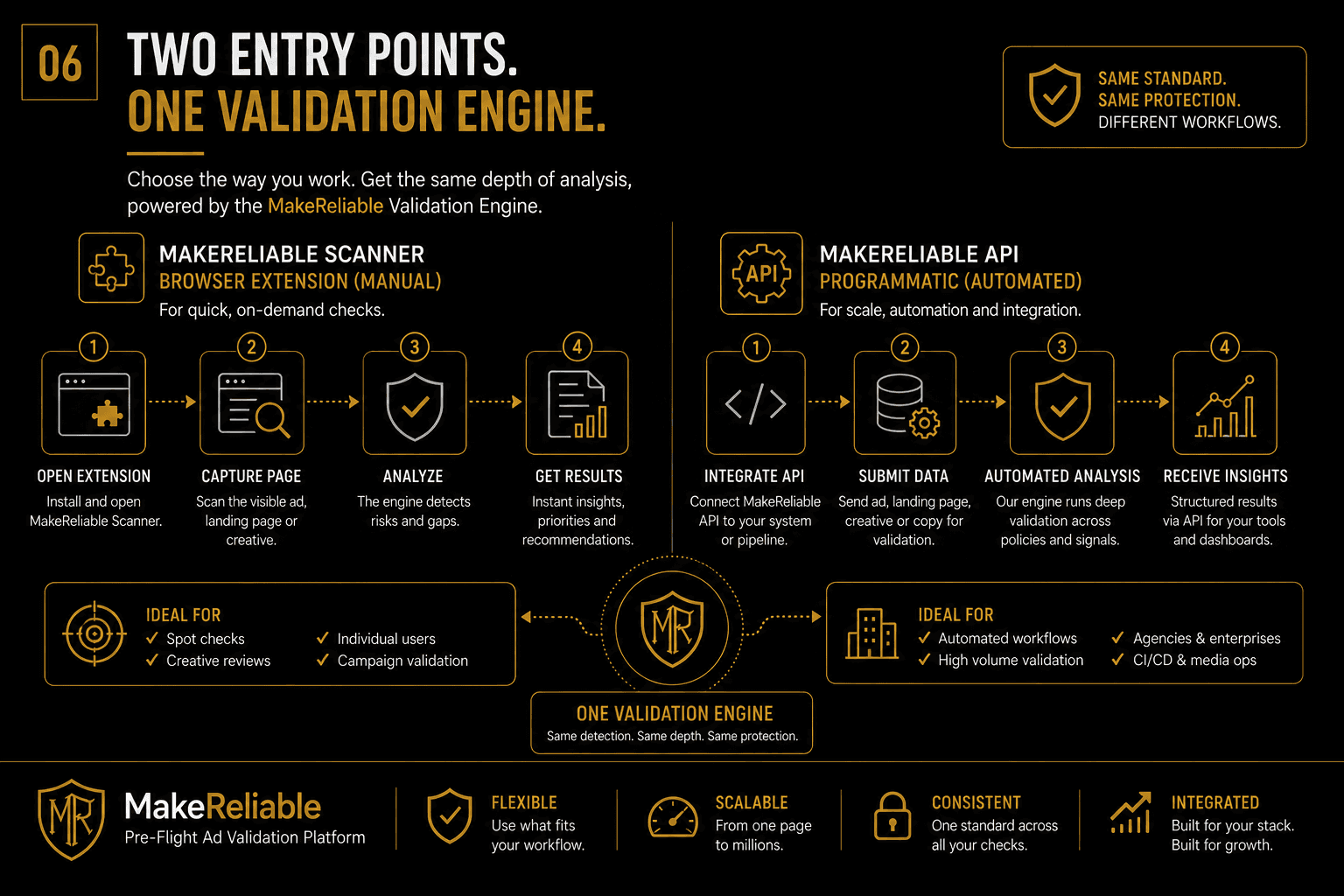
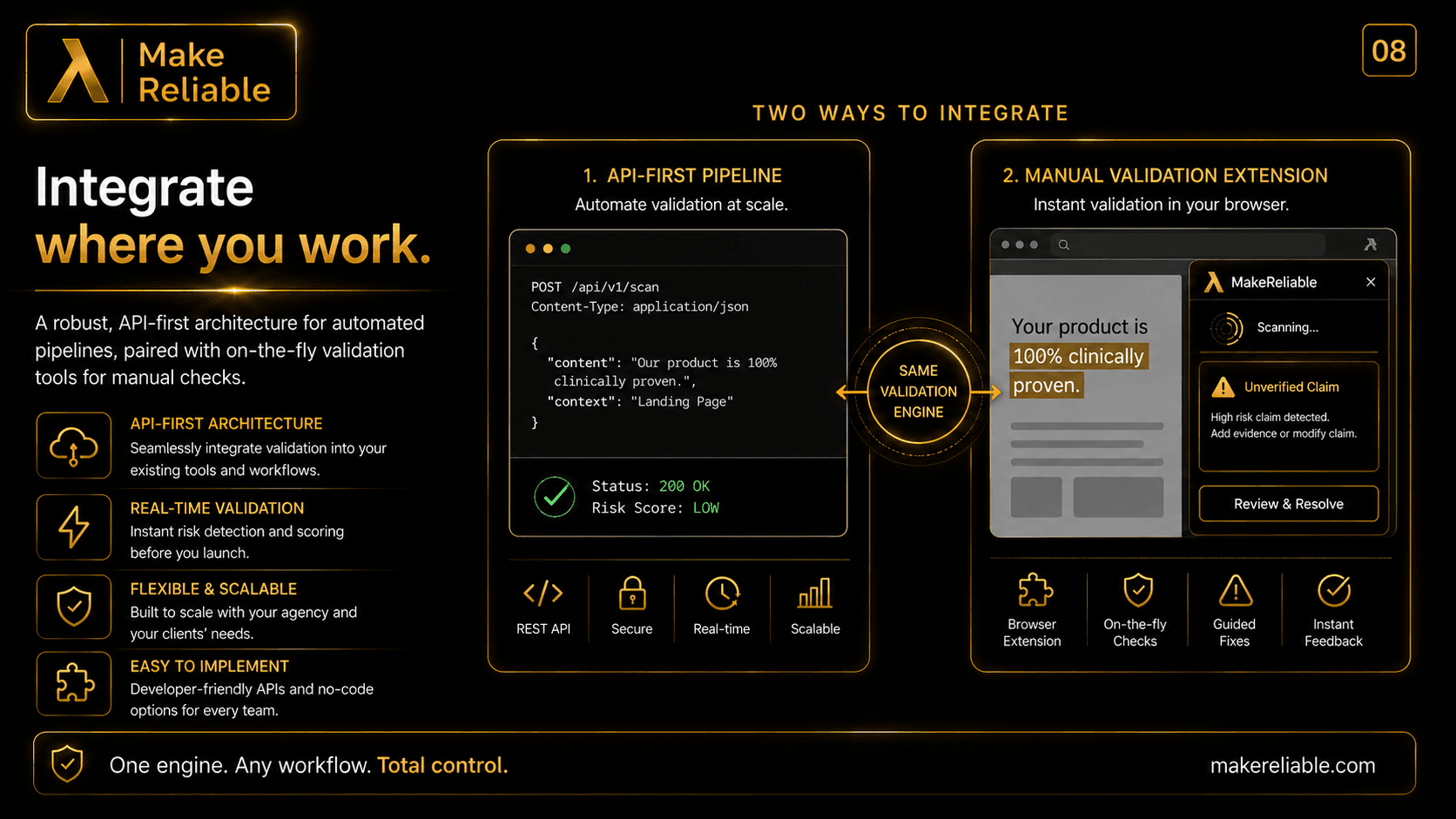
Integrate Where You Work: API-First Validation and Browser-Based Campaign Checks
Campaign validation works best when it fits the workflow teams already use. API-first pipelines and browser-based checks can stay aligned through one shared validation engine.
2026-06-18 · 4 min read
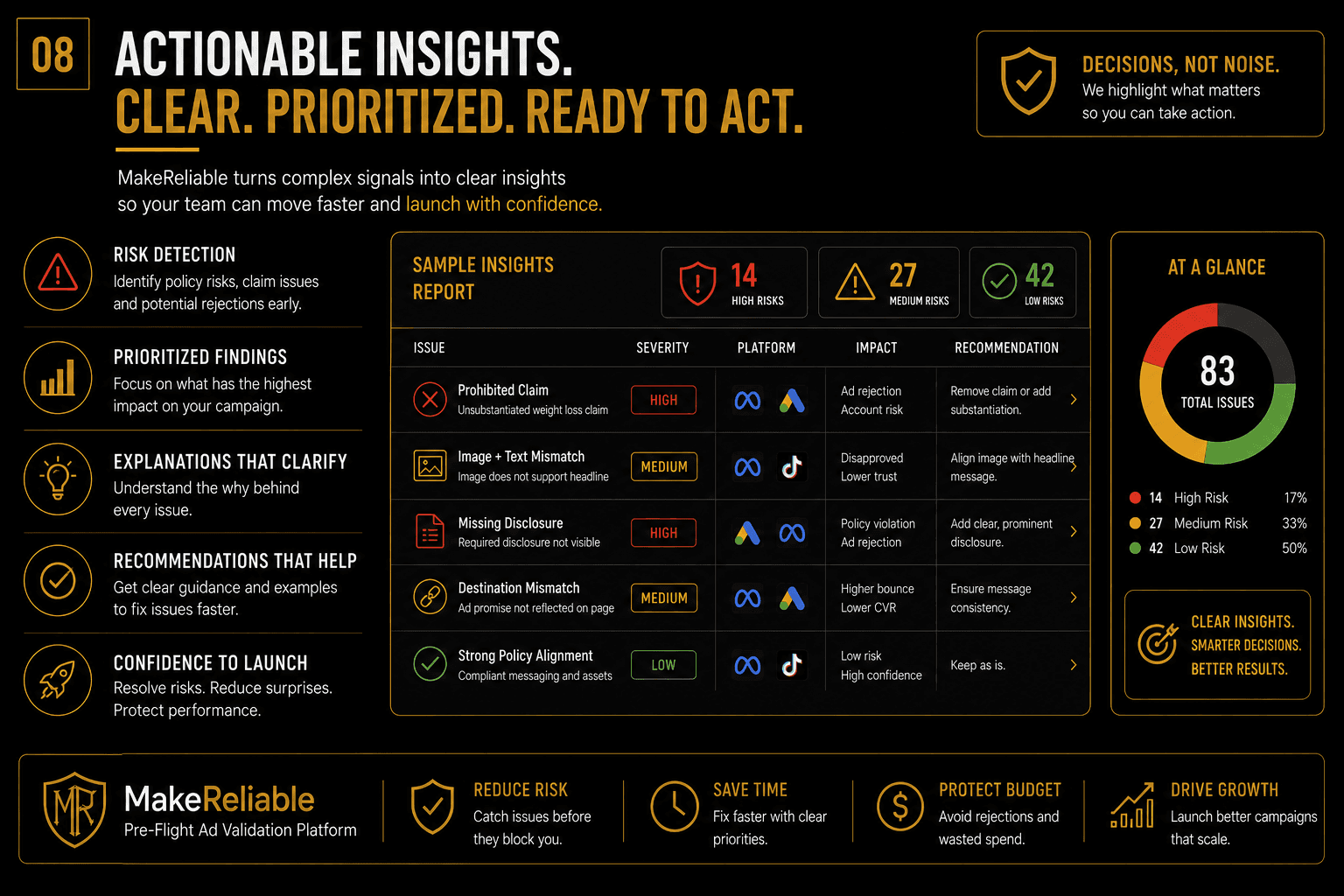
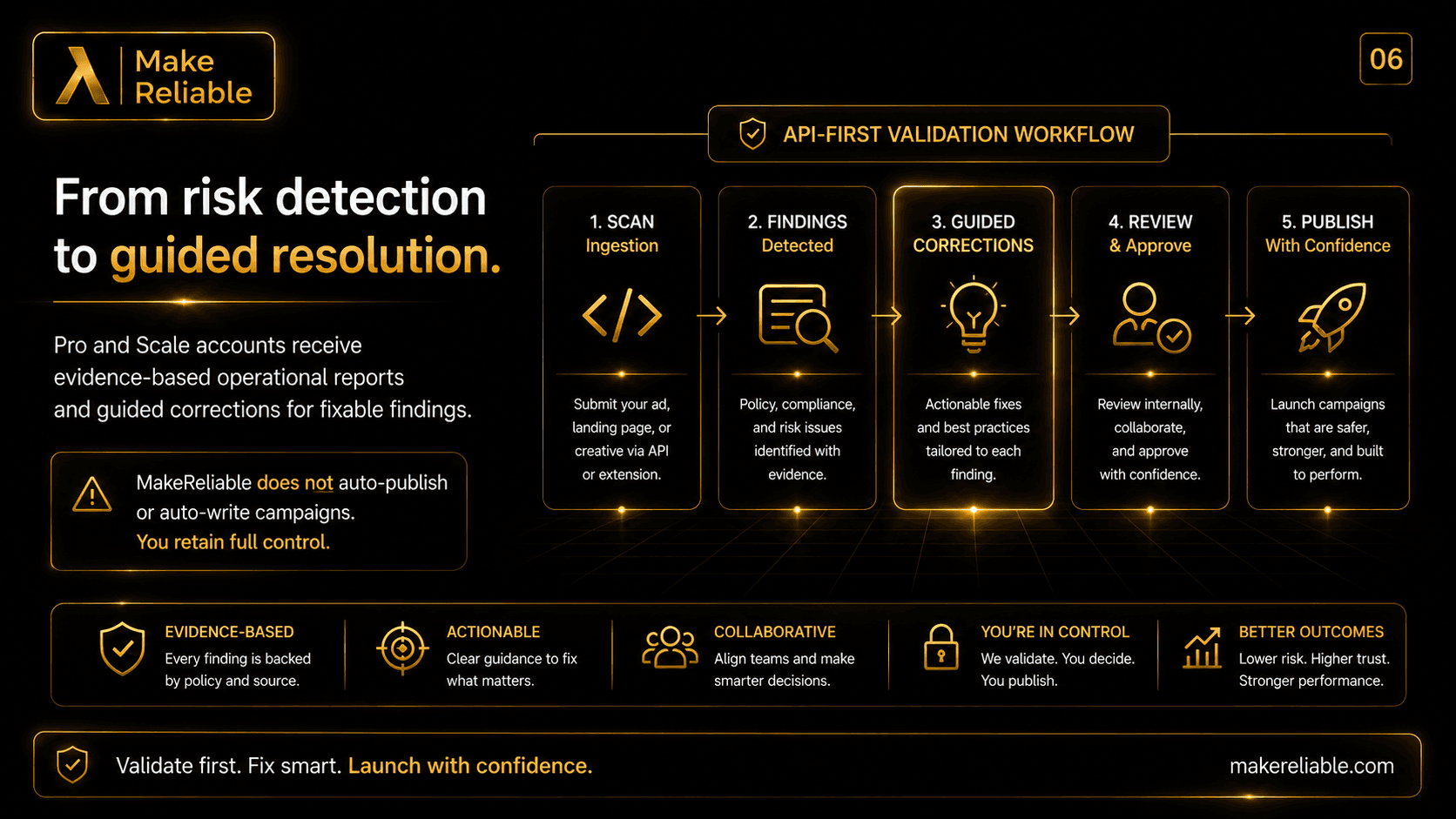
From Risk Detection to Guided Resolution: Why Campaign Teams Need Fixable Findings Before Launch
Risk detection alone does not help launch teams move faster. Campaign teams need fixable findings, guided corrections, internal review, and full control before publishing.
2026-06-18 · 4 min read
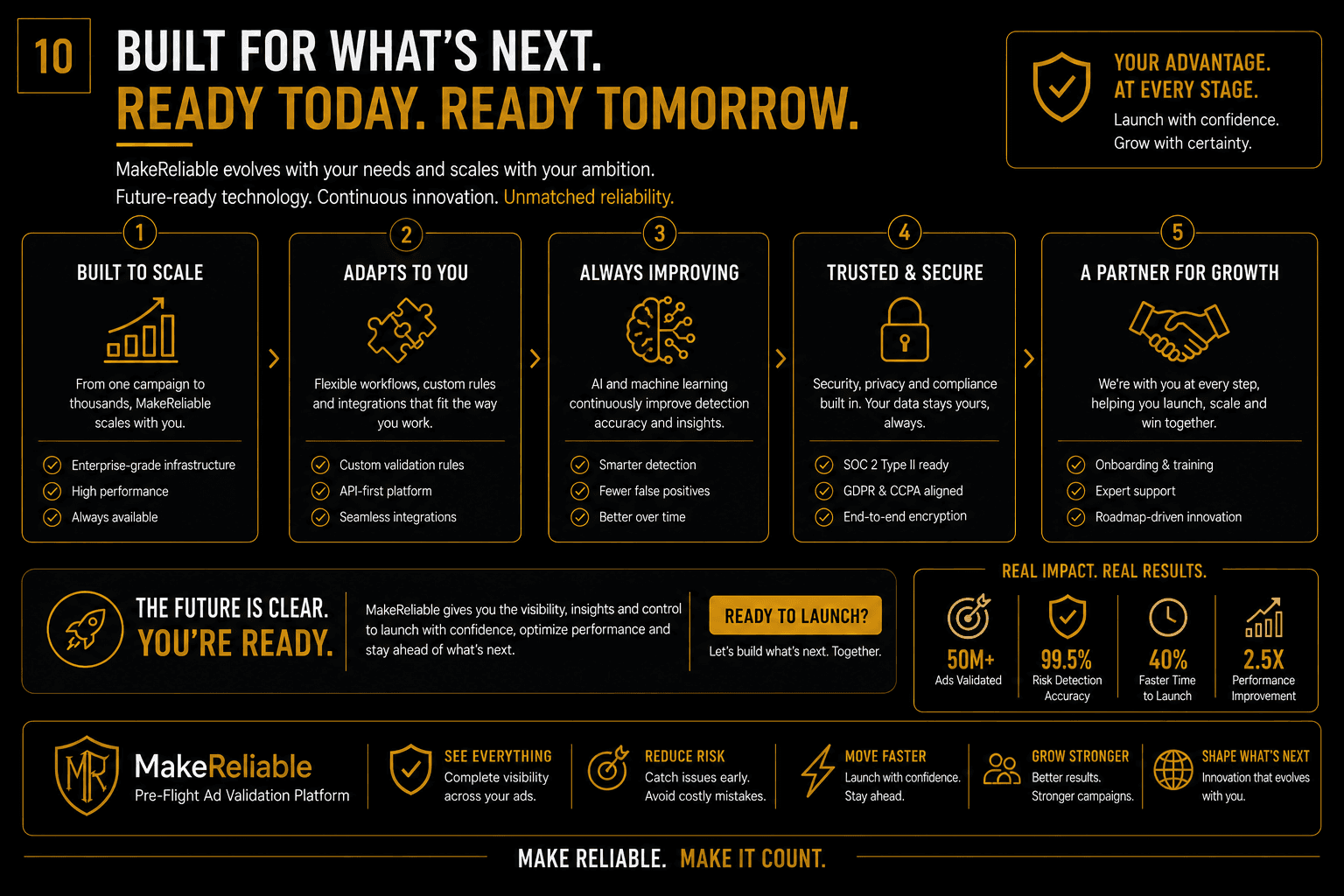
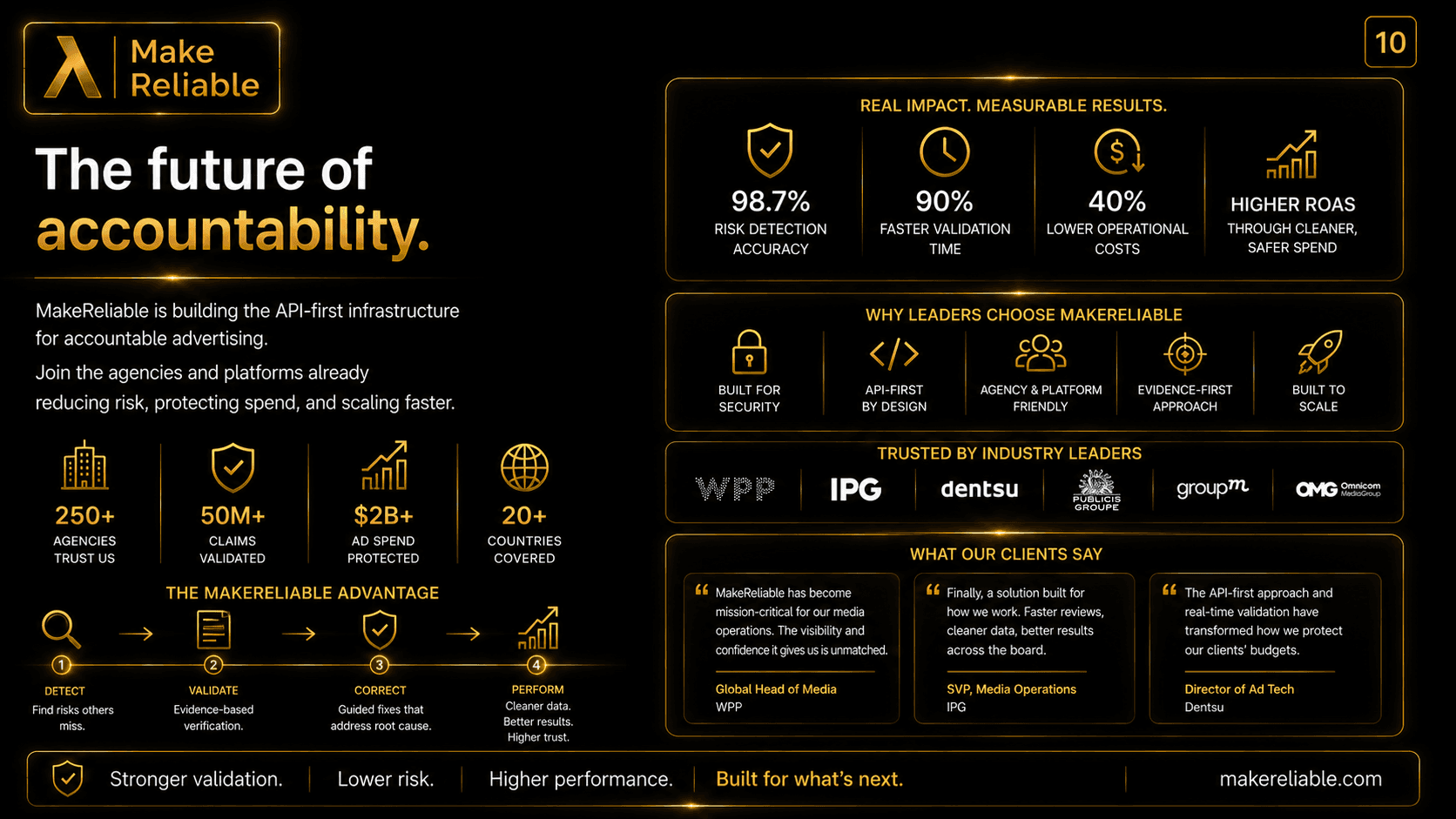
The Future of Accountable Advertising: Why Campaign Validation Needs API-First Infrastructure
Accountable advertising needs infrastructure, not just reactive review. Teams need to detect risk, validate evidence, guide corrections, and stay in control before spend scales.
2026-06-18 · 5 min read
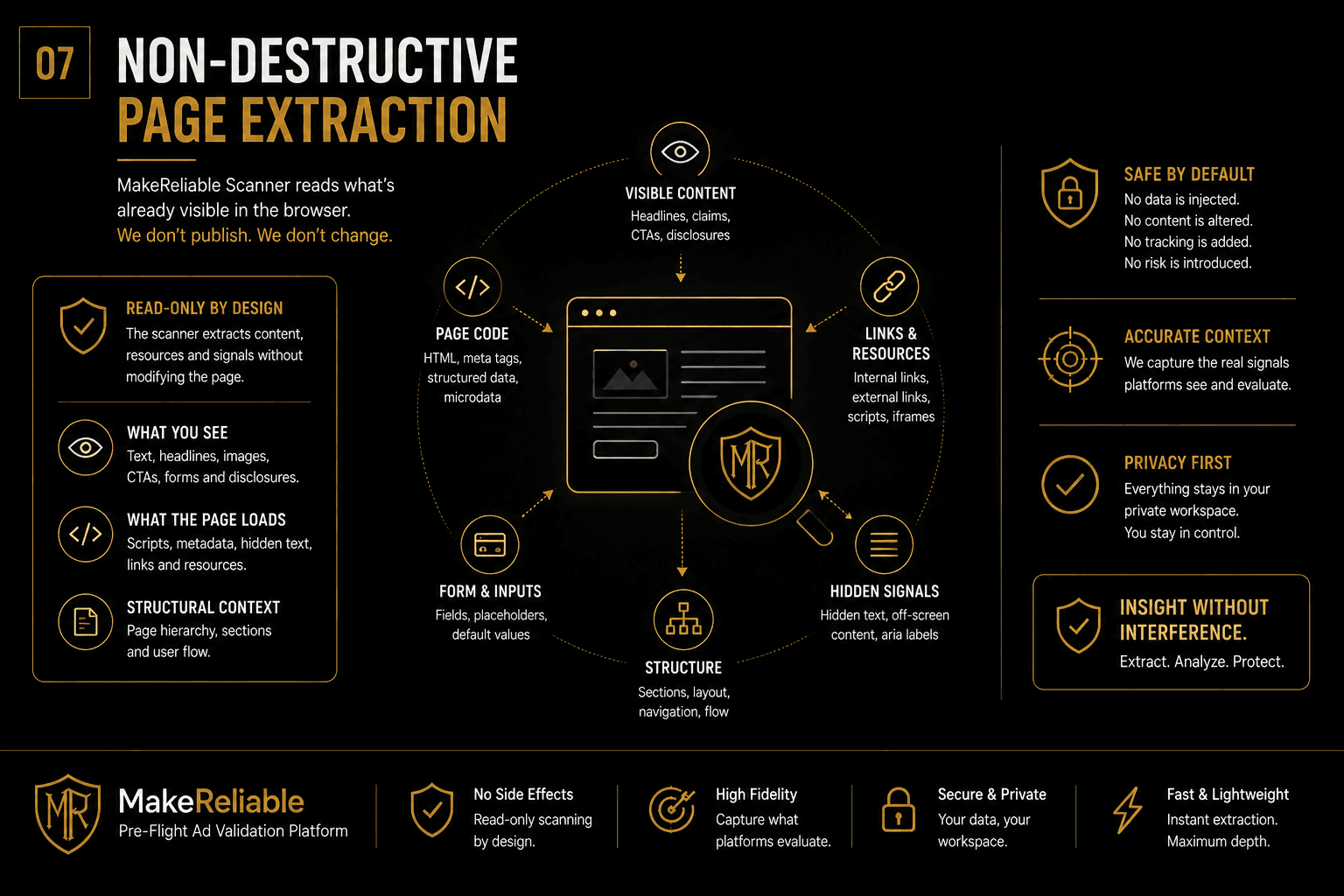
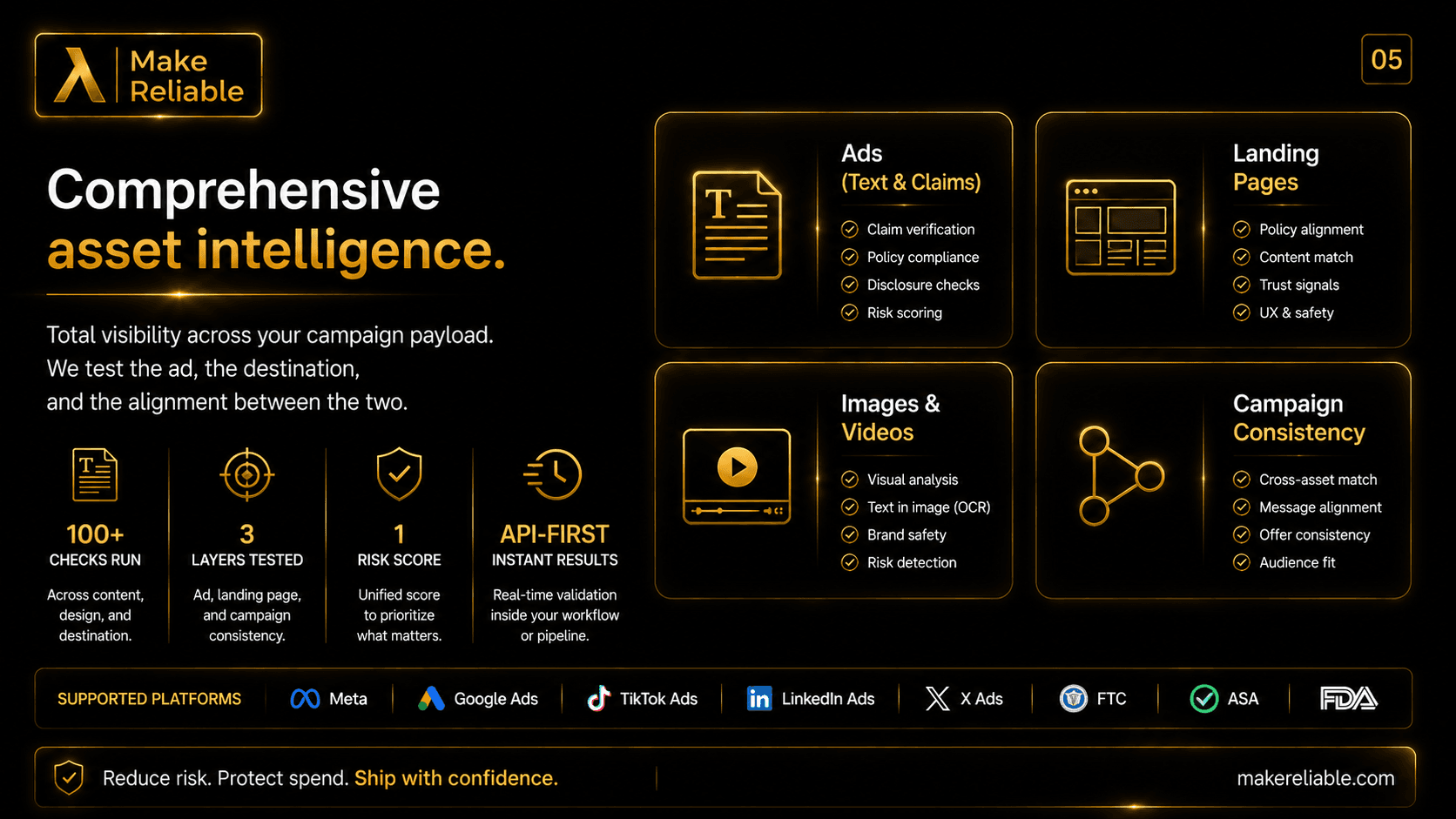
Comprehensive Asset Intelligence
Campaign risk does not live in one place. Teams need comprehensive asset intelligence across ads, landing pages, visuals, and campaign consistency before launch.
2026-06-18 · 4 min read
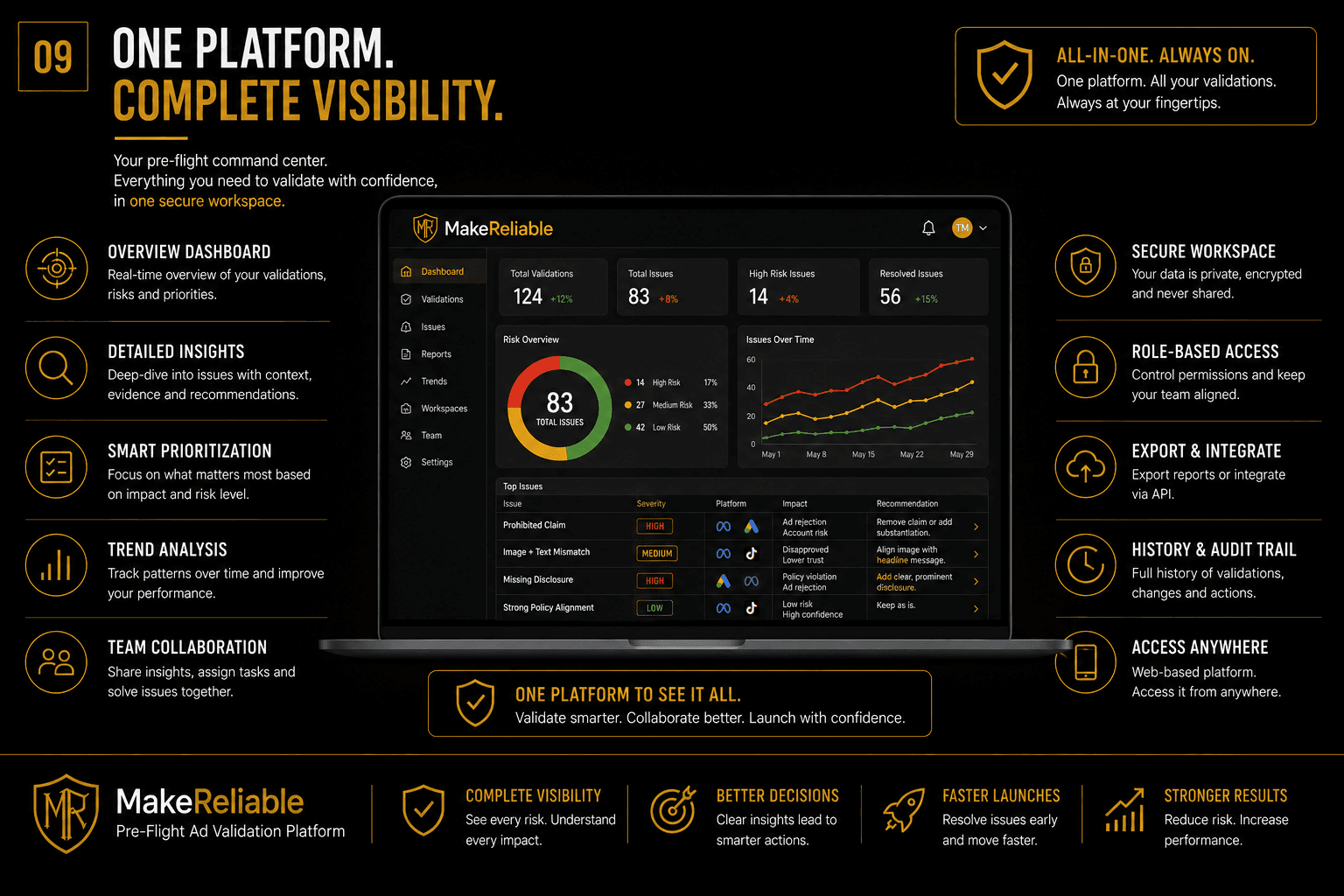
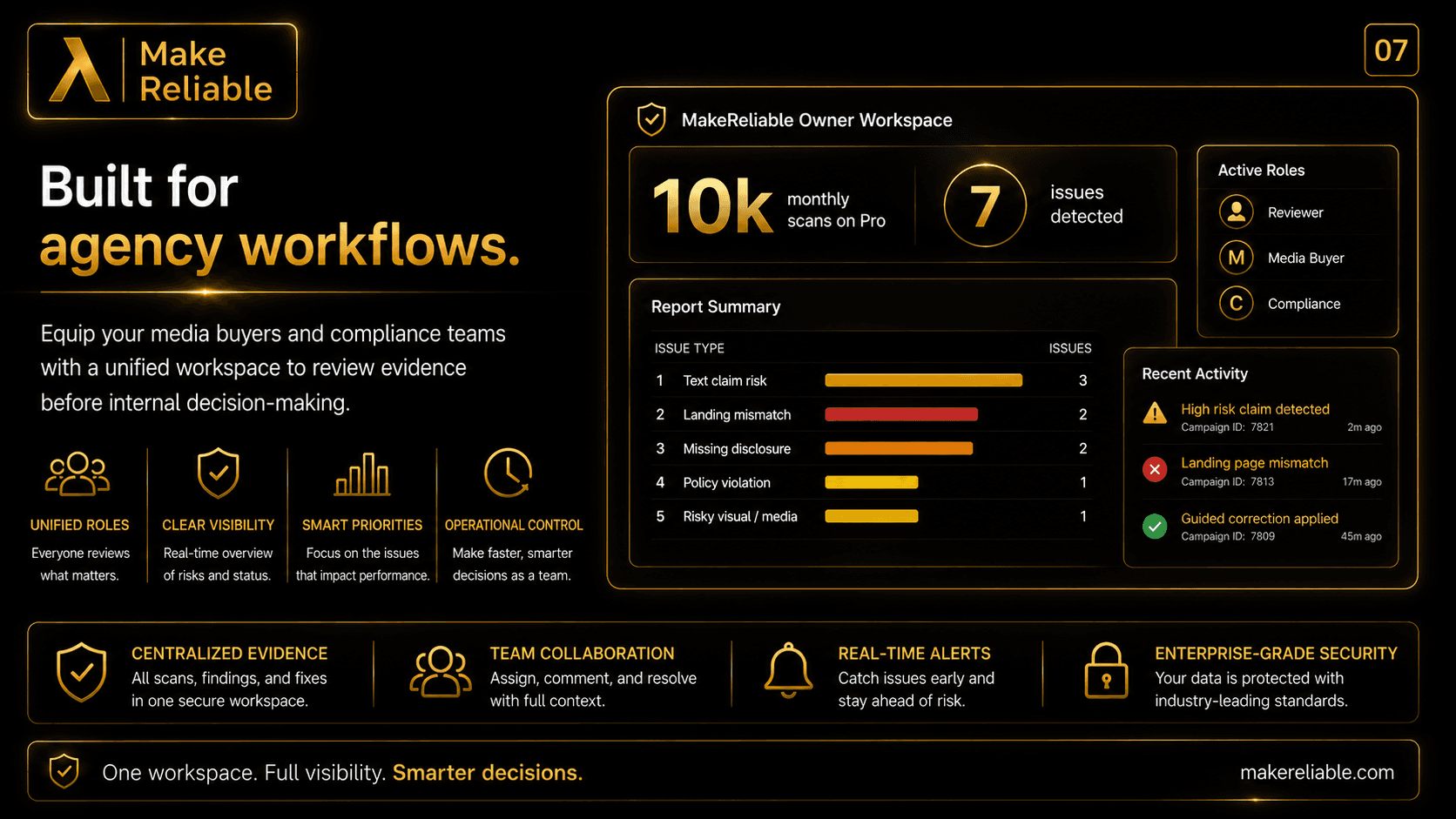
Built for Agency Workflows: Why Campaign Review Needs a Unified Workspace
Agency campaign review breaks down when evidence, roles, and decisions are spread across tools. Teams need one workspace for campaign evidence, priorities, collaboration, and internal decisions.
2026-06-05 · 2 min read
Why Agency Workflows Need A Validation Workspace
A validation engine is stronger when it is paired with a workspace built for agency roles, evidence review, and issue prioritization.
2026-06-05 · 1 min read
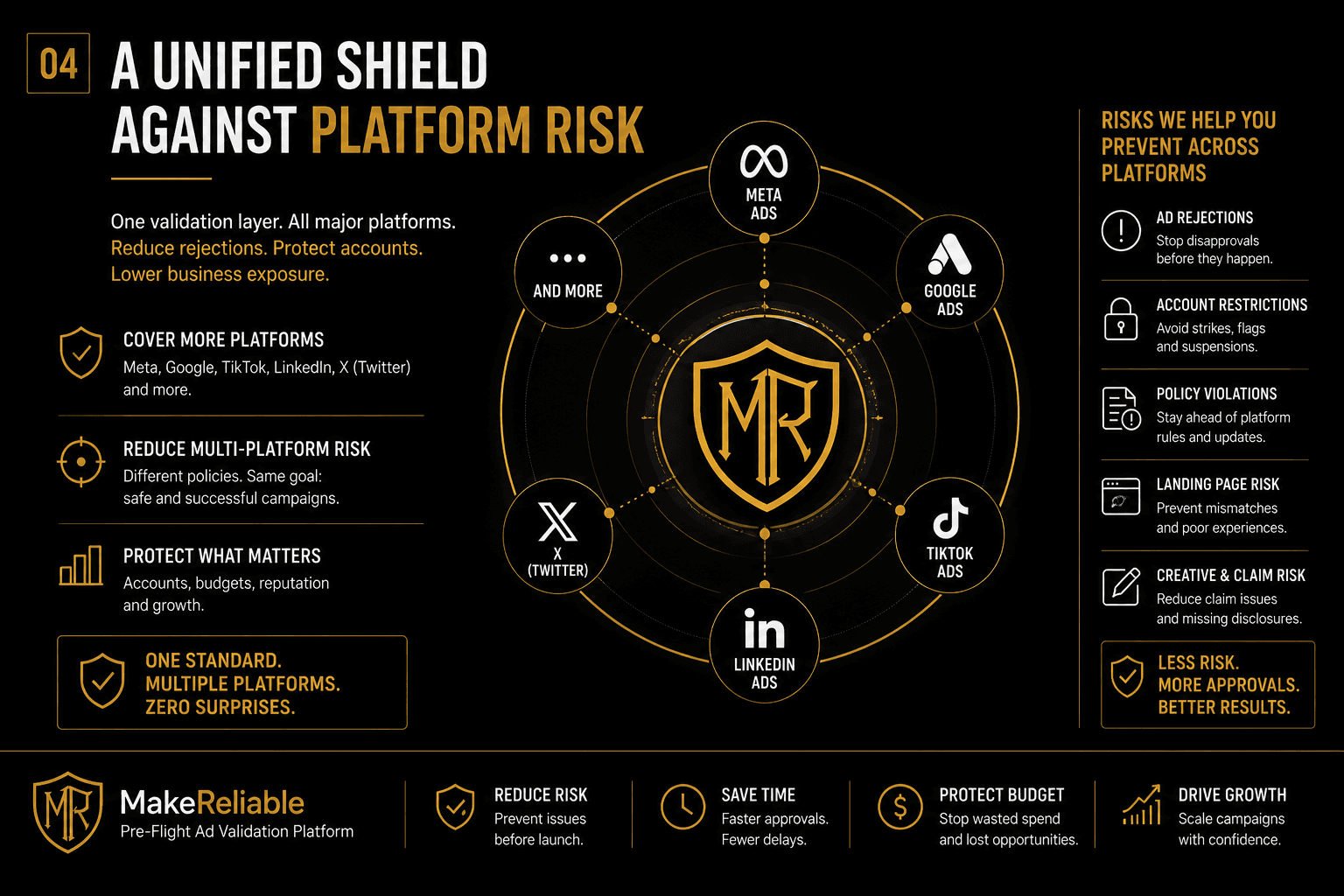
What Is Platform Risk In Digital Advertising?
Platform risk is not one rule violation. It is the broader launch exposure created by how platforms interpret claims, pages, and trust signals.
2026-06-05 · 1 min read
What Is Landing Page Risk In Paid Media?
Landing page risk is the exposure created when the destination page undermines the claim, compliance posture, or trust of the campaign.
2026-06-05 · 2 min read
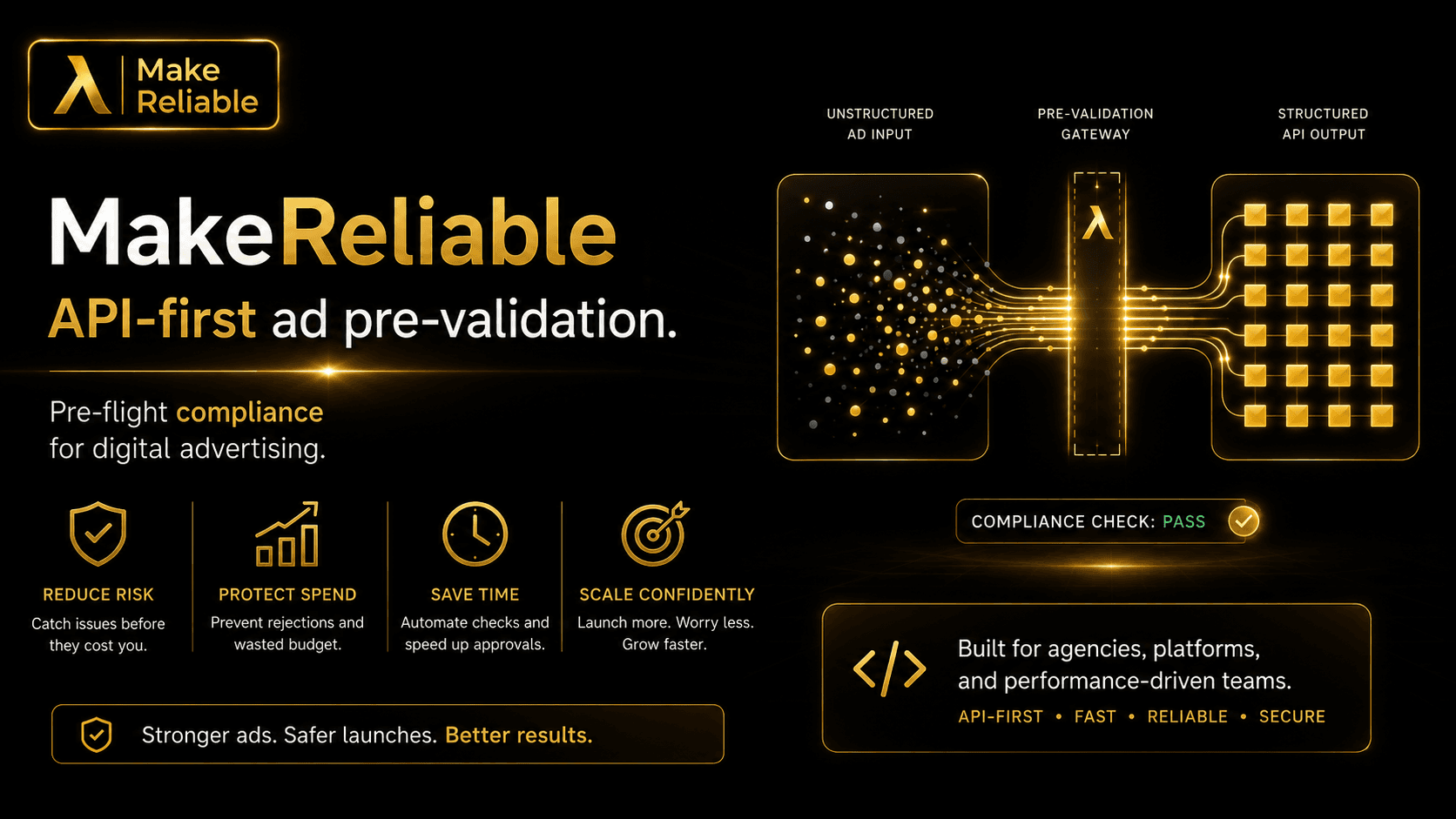
What API-First Ad Pre-Validation Means
API-first ad pre-validation converts pre-flight review into a repeatable system for ads, landing pages, claims, and launch readiness.
2026-06-05 · 2 min read
How Proactive Operations Reduce Operational Risk
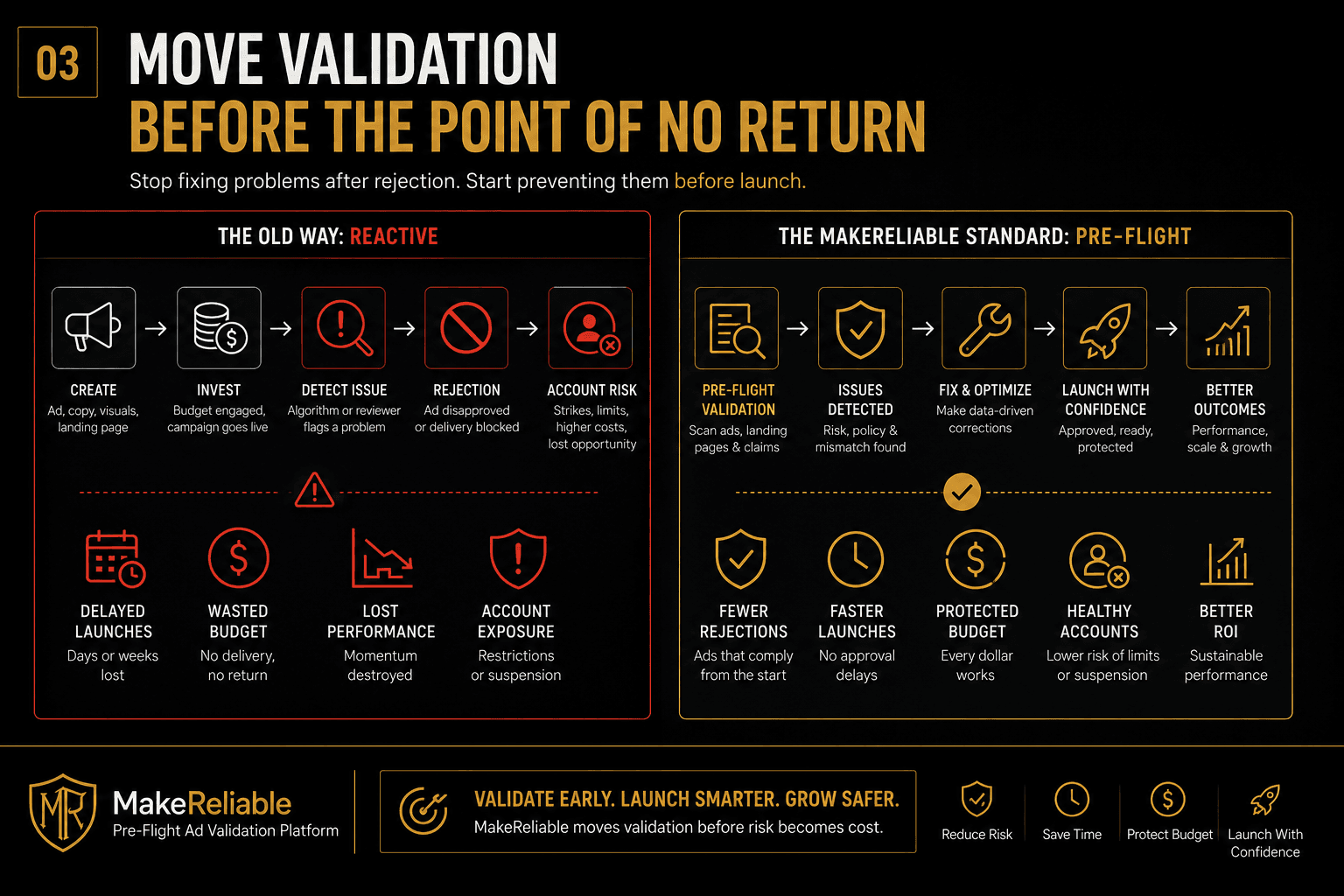
Operational risk falls when teams prevent issues before they start instead of paying to fix them after launch.
2026-06-05 · 2 min read
The Future Of Accountability In Digital Advertising
The future of accountability is not more reporting after launch. It is measurable validation before launch.
2026-06-05 · 2 min read
From Risk Detection To Guided Resolution
A useful validation workflow does more than detect risk. It helps teams resolve issues, review evidence, and launch with confidence.
2026-06-05 · 2 min read
API-First Vs Browser Extension Validation
Teams choose API-first validation for scale and browser extension validation for in-context manual review. Mature workflows often use both.
2026-06-05 · 9 min read
API-First Ad Pre-Validation: The MakeReliable Operating Model
API-first ad pre-validation helps teams validate ads, landing pages, claims, and campaign consistency before spend is committed.
2026-06-04 · 4 min read
Why Validation Belongs Before Campaign Launch
Validation belongs before launch because it is cheaper, calmer, and more useful before media and delivery pressure begin.
2026-06-04 · 4 min read
Why Campaigns Fail After Launch
Campaigns often fail after launch because teams discover structural issues only once spend is already live.
2026-06-04 · 4 min read
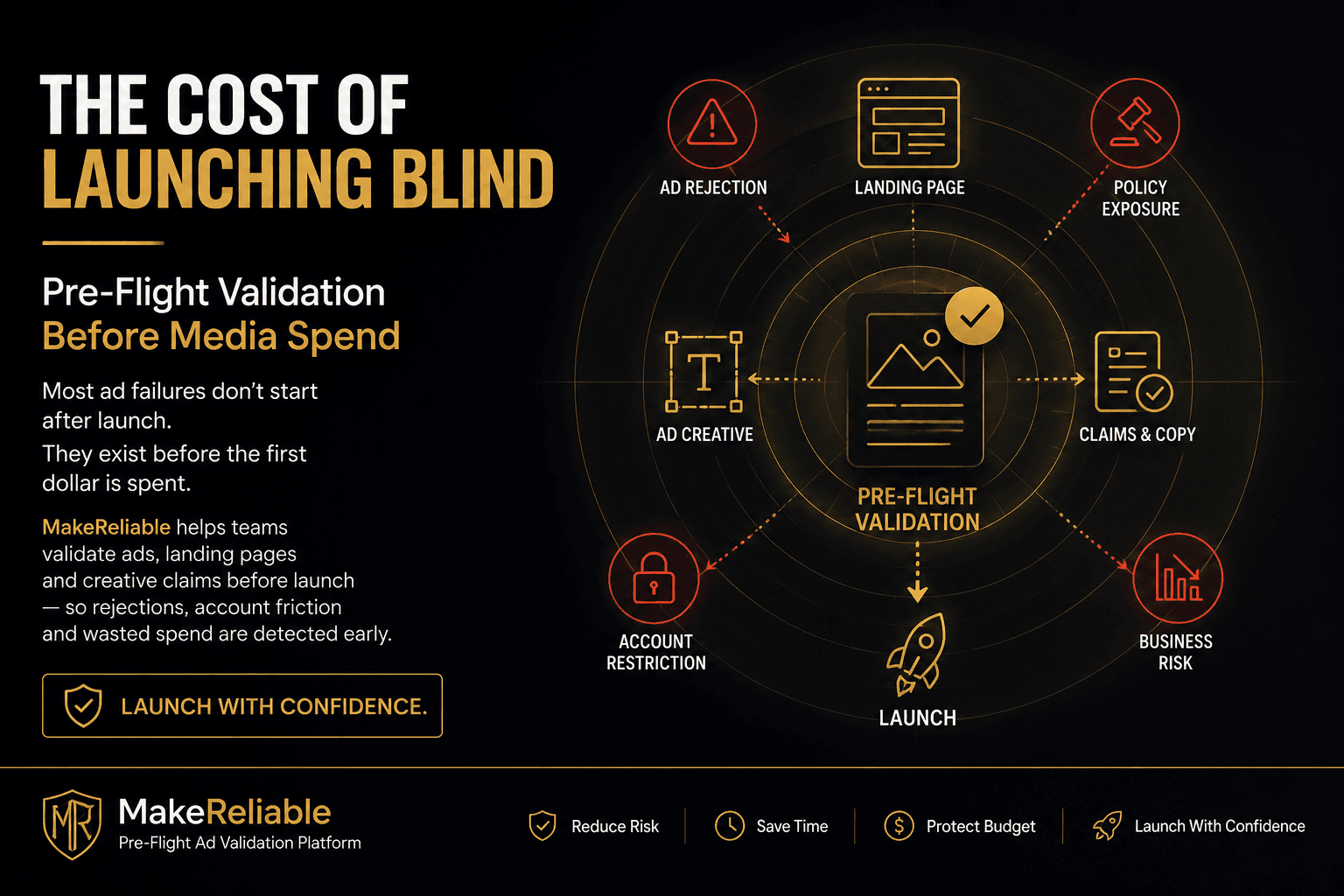
What Is Pre-Flight Ad Validation?
Pre-flight ad validation reviews ads, landing pages, disclosures, and claims before launch so avoidable risk is seen early.
2026-06-04 · 4 min read
Landing Page Mismatch: Why Ads Get Rejected
Landing-page mismatch can trigger rejection risk when ad promises, page content, and disclosures do not align.
2026-06-04 · 5 min read
How Platform Risk Creates Wasted Spend
Platform risk is not abstract. It turns into lost spend when campaigns carry unresolved policy, landing-page, or trust issues.
2026-06-04 · 4 min read
How Agencies Can Reduce Ad Rejection Risk
Agencies reduce ad rejection risk when they standardize review, prioritize findings, and create visible pre-flight discipline.
2026-06-04 · 5 min read
Chrome Extension vs API Validation Workflow
The extension and the API support different operating models, but both can feed the same validation standard.
2026-06-04 · 4 min read
Ad Compliance Validation Before Media Spend
Ad compliance validation before media spend helps teams review claims, disclosures, and landing-page evidence before launch pressure begins.
2026-02-22 · 3 min read
Why Meta Risk Is an Accumulation Problem
Understanding why ad account instability builds over time instead of appearing instantly.
2026-02-22 · 1 min read
Why MakeReliable exists
Operational control for Meta advertising teams.
2026-02-22 · 4 min read
What an Operational Control Layer Actually Means
Defining the concept of operational control in Meta advertising environments.
2026-02-22 · 4 min read
A Practical Campaign QA Checklist for Agencies
A structured QA checklist to reduce Meta campaign risk.
2026-02-22 · 3 min read
The Hidden Reasons Meta Ad Accounts Get Shut Down
Structural risk factors behind Meta ad account shutdowns.
2026-02-22 · 3 min read
Campaign Chaos: Why Dashboards Don’t Solve Operational Risk
Why metrics visibility is not the same as structural control.