Ad compliance validation is most useful before spend starts.
Once budget is live, compliance issues stop being review items and start becoming operational liabilities.
Why timing changes the outcome
Before launch, teams can still make calm corrections.
After launch, the same issue can create:
- rejection and delay
- internal escalation
- wasted media budget
- extra reviewer scrutiny
- slower iteration cycles
That timing difference is why pre-flight review matters.
What should be validated
Ad compliance validation should focus on the materials the platform and the user actually encounter:
- claims and qualifying language
- disclosures and visibility
- headline-to-page consistency
- creative framing and implied promises
- page context that changes how the ad is interpreted
Why architecture matters
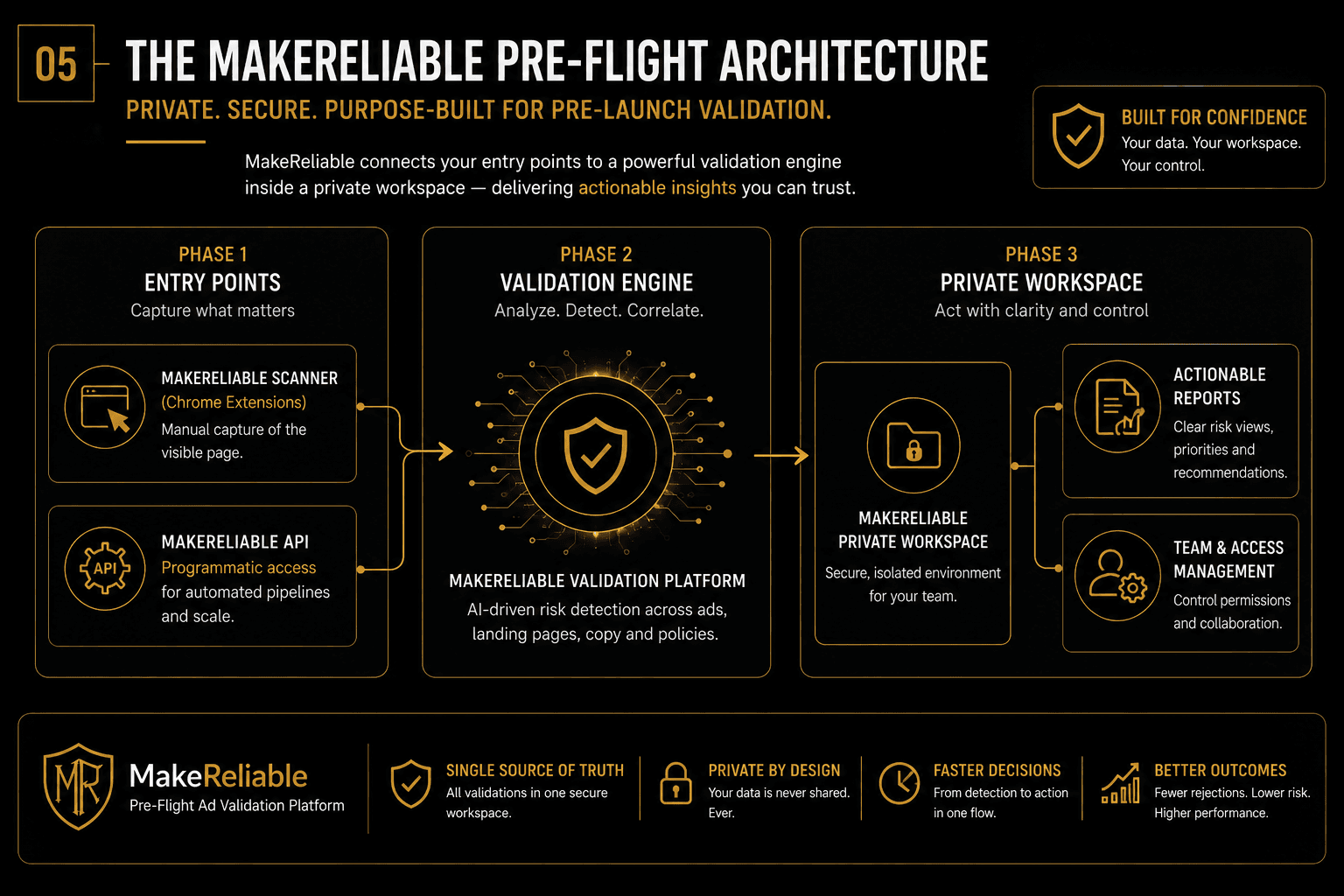
Validation is stronger when it is handled inside a private workspace with clear evidence and structured outputs.
That makes it easier for teams to:
- review findings with context
- prioritize the highest-risk issues
- keep a clear record of what was checked
- act without losing control of the workflow
Compliance is not a marketing slogan
No serious system should claim guaranteed approval.
What a disciplined validation process can do is reduce obvious exposure, improve consistency, and help teams launch with stronger evidence behind the decision.
That is the role of ad compliance validation before media spend: not certainty theater, but practical risk reduction.