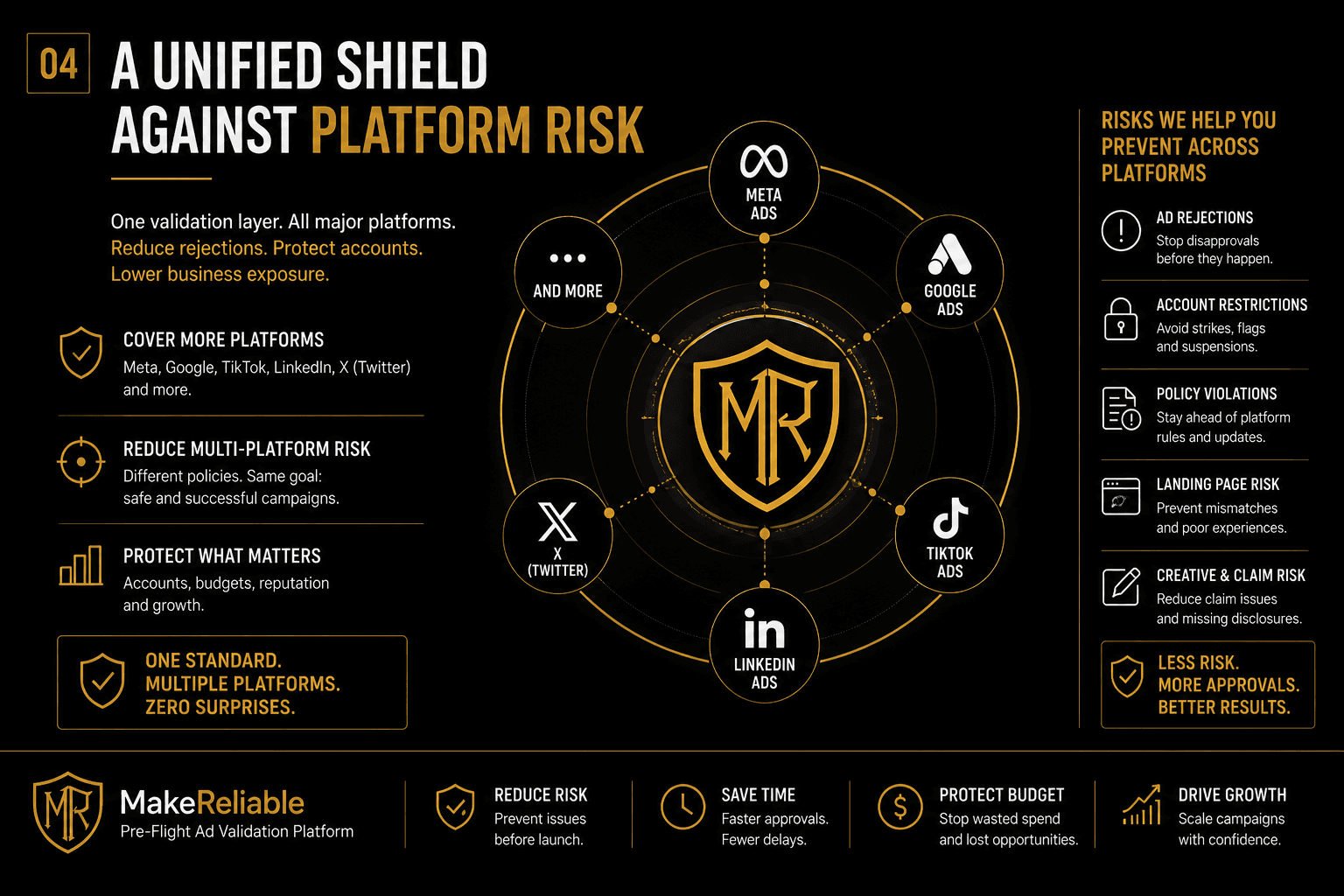
Platform risk is the gap between what a campaign team intends to launch and what ad platforms are willing to approve, trust, and keep delivering.
That gap has a cost.
Platform risk is not only about rejection
Teams often reduce platform risk to a binary outcome: approved or rejected.
The reality is wider than that.
Platform risk can create:
- slower reviews
- limited delivery
- more manual scrutiny
- lower trust in future submissions
- account instability over time
The budget impact can be real even when a campaign technically launches.
Why it compounds across channels
Every platform has its own policies, thresholds, and review signals.
But the underlying risks repeat:
- unsupported or aggressive claims
- weak disclosure visibility
- message-to-page mismatch
- misleading structure or presentation
- repeated operational inconsistency
When the same issues travel across Meta, Google, TikTok, LinkedIn, or X, the business is not dealing with isolated mistakes. It is carrying platform risk as a recurring operating condition.
Wasted spend starts before the dashboard shows it
By the time teams see the impact in performance dashboards, money has already been allocated and momentum has already been lost.
That is why platform risk should be treated as pre-flight work. The goal is to reduce exposure before launch, not only explain performance after the fact.
What stronger teams do differently
Strong launch teams standardize review before submission.
They validate:
- cross-platform policy-sensitive copy
- creative and claim alignment
- landing-page consistency
- disclosure placement
- operational patterns that create avoidable exposure
That does not create a legal guarantee or an official platform shortcut. It creates a more disciplined launch process with less waste built into it.