A campaign can fail review even when the ad creative looks clean.
That happens when the destination page does not support the story the ad is telling.
What landing-page mismatch looks like
Mismatch appears in several forms:
- the ad promise is stronger than the page evidence
- the headline and landing-page intent diverge
- the disclosure is missing, hidden, or hard to interpret
- the page structure creates ambiguity around the offer
- the visible content and loaded page signals tell different stories
Platforms do not evaluate ads in isolation. They evaluate the experience the ad leads into.
Why page extraction matters
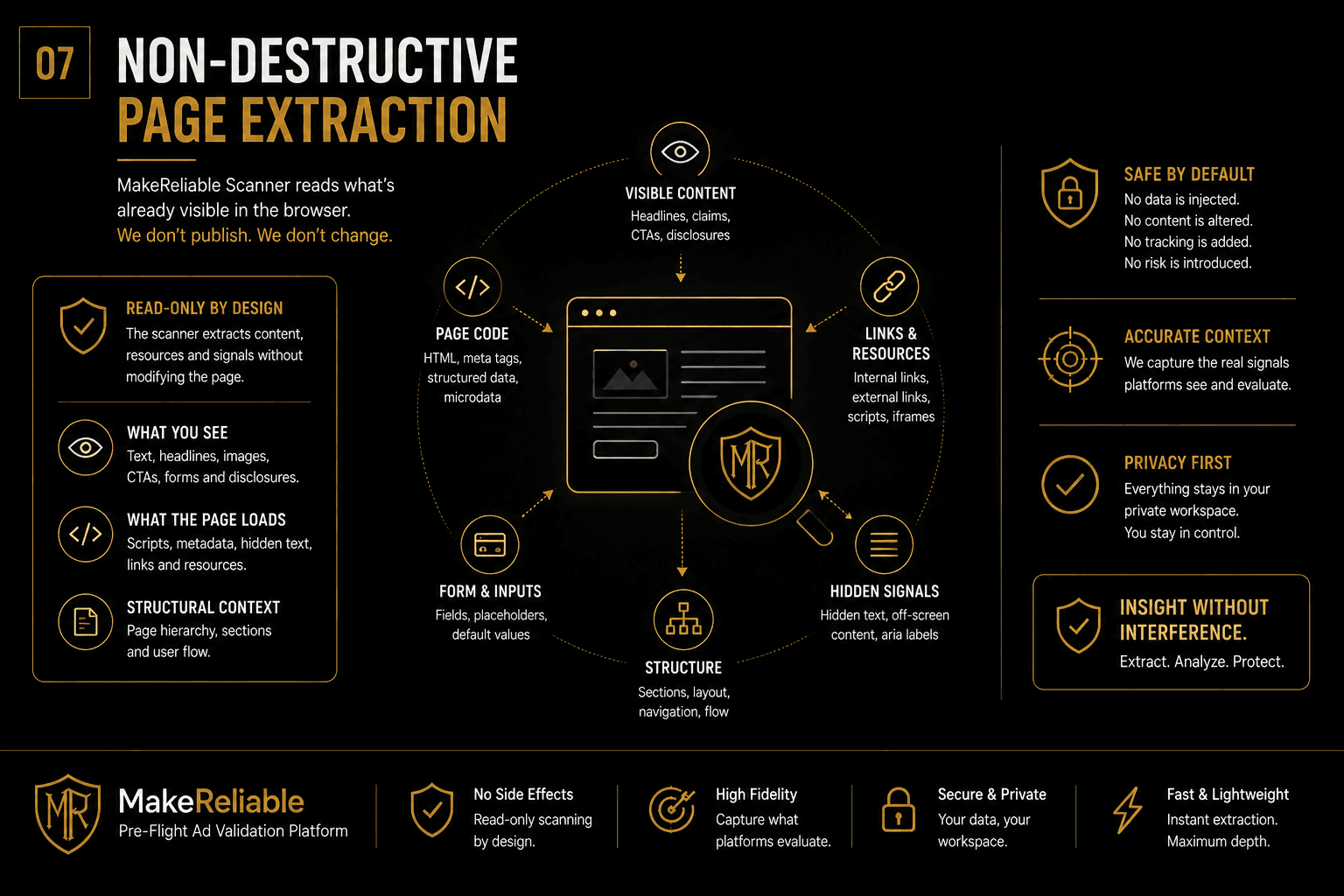
A meaningful landing-page review needs to see what the page actually communicates.
That includes:
- visible headlines and claims
- forms, CTAs, and qualification language
- links, scripts, and structural elements
- loaded resources and hidden signals that affect context
The most useful review is read-only and non-destructive. It should capture signals without modifying the page or introducing new risk.
Why teams miss it
Landing pages often evolve faster than campaign review workflows.
That means creative can be approved internally while the page has already drifted. By launch time, the team is promoting an experience that no longer cleanly matches the ad.
How to reduce mismatch risk
Before launch, teams should compare:
- ad claim to page headline
- CTA intent to page flow
- disclosure language to claim sensitivity
- creative framing to visible page evidence
The goal is not cosmetic QA. It is to reduce avoidable rejection risk and improve trust in the launch path.